Compare lighter chairs that are easier to lift and push.
Manual wheelchair guide: how to choose the right chair
A manual wheelchair is a chair that moves when the user pushes the wheels or when a helper pushes from behind. This guide explains the main types, what to check on fit, wheels, brakes and cushions, and how a manual wheelchair compares with a lightweight wheelchair, a portable wheelchair and an electric wheelchair.
What is a manual wheelchair?
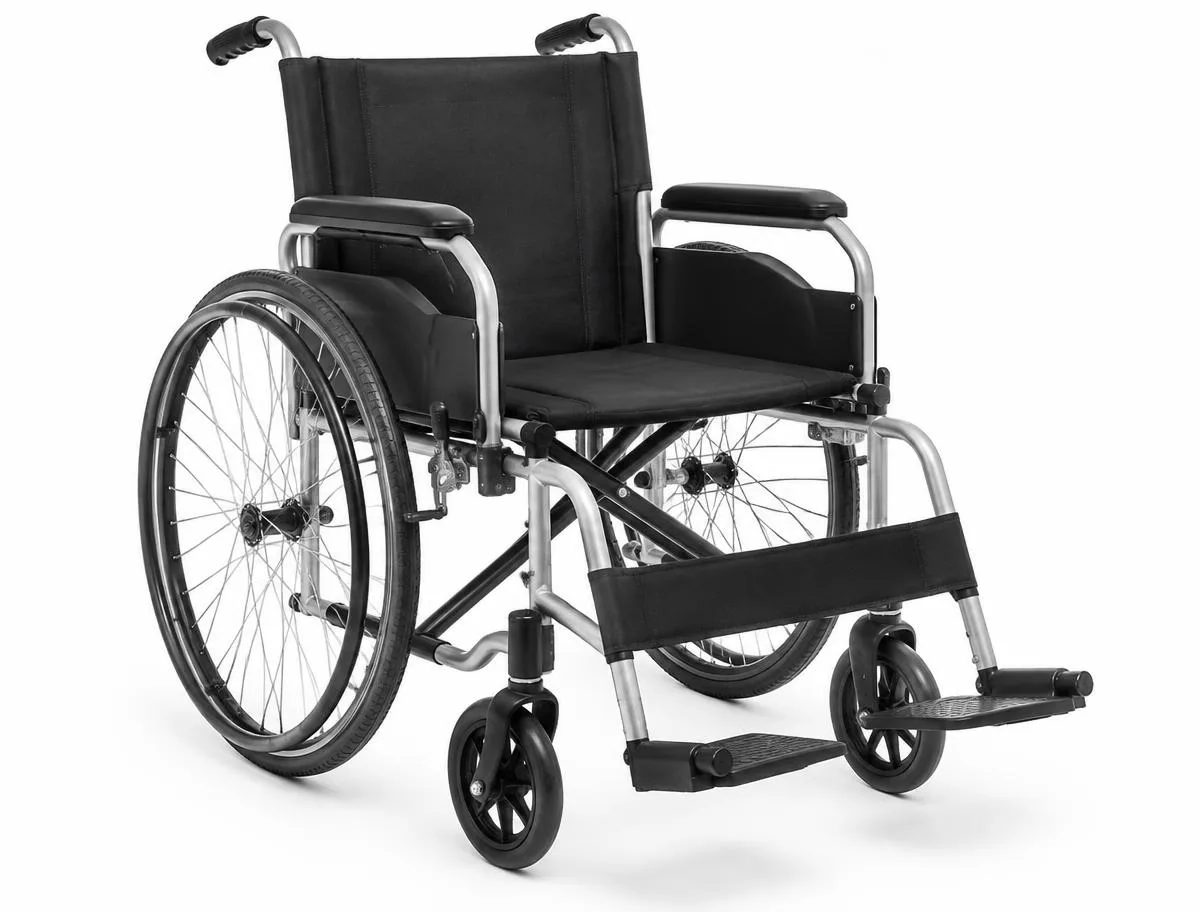
A manual wheelchair has no motor. It moves by muscle power, either from the user turning the large rear wheels by hand or from a helper pushing the handles. Many people use one every day, and others keep one for appointments, outings or times when walking is tiring.
Self-propelled and attendant-propelled chairs
A self-propelled chair has large rear wheels with push rims, so the user can move it without help. An attendant-propelled chair has smaller rear wheels and push handles, so a caregiver does the pushing. Some chairs suit both styles. A transport chair is one example of an attendant-propelled design.
Who a manual wheelchair may suit
A manual wheelchair may suit someone who has enough strength and stamina to push, or who has a helper nearby. It can also suit someone who wants a chair that is simple to store and has no battery to charge. Because needs differ, ask a healthcare professional or therapist which style and setup fit the user.
Manual wheelchair or another mobility aid?
The right choice depends on strength, daily routine, the places the user goes and who is helping. These notes compare a manual wheelchair with the other chairs on this site.
Manual wheelchair or electric wheelchair
An electric wheelchair uses a motor, so the user does not push. A manual wheelchair asks for physical effort, which some users want and others find tiring over a longer day. A motorized wheelchair works in a similar way to an electric chair, so people who tire easily often compare all of them.
Manual wheelchair or transport chair
A transport chair is made to be pushed by someone else, so the user cannot easily move it alone. A self-propelled manual wheelchair gives the user control of their own movement. For short outings with a helper, many people compare the two.
Manual wheelchair or mobility scooter
A mobility scooter is a powered aid that the user steers. See the mobility scooters guide if a manual wheelchair feels like too much effort for longer trips, and ask a healthcare professional which option is safe for the user.
Types of manual wheelchair
Basic wheelchairs
A basic wheelchair is a simple, standard-style manual chair. It usually has a fixed seat, standard wheels and removable footrests, and it often suits occasional use. People who search for basic wheelchairs are often looking for a straightforward chair without extra adjustments. A basic wheelchair may offer little adjustment, so check that the seat, back and footrests fit the user.
Folding and non-folding wheelchairs
Many manual wheelchairs fold, which makes them easier to store and to put in a car. Some chairs do not fold. A non-folding wheelchair has a rigid frame, and many users and therapists like it for a stable feel and fewer moving parts. Compare how you will store and transport the chair before you decide.
Lightweight and portable chairs
Some manual chairs are made to be lighter or to travel more easily. A lightweight wheelchair can be easier to lift and push, and a portable wheelchair is made for carrying and trips. Check the weight the maker lists for the chair you choose.
Manual wheelchair for a tall person
A tall person may need a longer seat depth, a higher back and footrests that adjust further. Ask the maker which seat sizes and adjustments a chair offers, and ask a healthcare professional or therapist to check the fit.
What to look for in a manual wheelchair
Seat size and fit
The seat should support the user without squeezing or leaving large gaps. Look at seat width, seat depth and back height, and check that the user can sit comfortably and safely. Ask a healthcare professional or therapist to confirm the fit.
Wheels and tires
Large rear wheels with push rims let the user propel the chair. Tires can differ for smooth floors and for outdoor ground. Check that the wheels turn freely and that the tires are in good condition.
Brakes
Brakes keep the chair still when the user is getting in or out. Check that they are easy to reach and easy to use, and that they hold firmly. If a helper will push the chair, ask whether the brakes can also be used from behind.
Footrests and armrests
Footrests support the legs, and armrests help with getting in and out and with posture. Many are removable or adjustable. Check that they can be moved out of the way for transfers and put back securely.
Cushions and posture
A cushion adds comfort and can affect posture and skin health on long days. Ask a healthcare professional or therapist which cushion suits the user, and follow the maker's instructions.
Frame materials
Frames are commonly made of steel or aluminum. Steel is often described as sturdy, while aluminum is often described as lighter. Compare what each material offers for the user's routine.
Questions to ask before you choose
- Who will push the chair: the user, a helper or both?
- Where will the chair be used most: indoors, outdoors or both?
- How will the chair be stored and moved, and does it need to fold?
- Do the seat, back and footrests suit the user's body and posture?
- What does the maker list for weight, capacity and seat sizes?
- What is included with the chair, and what support follows the sale? Ask the seller to explain this clearly.
Using and caring for a manual wheelchair
Safe use
Follow the maker's instructions for setup and use. Lock the brakes before getting in or out, keep the footrests secure, and ask a healthcare professional or therapist to show safe ways to transfer and to move on slopes or uneven ground.
Regular checks
Check the tires, wheels, brakes, footrests and seat often, and keep the chair clean and dry. If a part looks worn or does not work well, stop using the chair until it has been checked.
Frequently asked questions
Neither is better for everyone. A manual wheelchair has no motor, so the user or a helper provides the push. An electric wheelchair uses a motor, which can reduce effort. Strength, stamina, daily routine and where the chair is used all matter, so ask a healthcare professional or therapist for advice.
Check seat width, seat depth, back height and footrest length against the user's body and posture. Ask the maker which seat sizes and adjustments a chair offers, and ask a healthcare professional or therapist to check the fit.
A basic wheelchair is a simple, standard-style manual chair, usually with limited adjustment. It can suit occasional use. If the user needs more adjustment or an easier chair to lift, compare a lightweight wheelchair.
A folding chair is easier to store and to carry in a car. A non-folding chair has a rigid frame that many people find stable. Think about storage, transport and how the chair will be used. A portable wheelchair is worth a look if travel matters.
Some chairs offer a longer seat depth, a higher back and footrests that adjust further. Ask the maker which sizes and adjustments a chair offers, and ask a healthcare professional or therapist to check the fit.
The cost depends on the type of chair, the frame material, the adjustments and the accessories. Chairs with more adjustment or lighter frames often cost more. Ask what is included before you compare options, and check the current cost with the seller.
Weight varies with the frame material, the size and the parts fitted. Lightweight chairs are made to be easier to lift and push. Check the weight the maker lists for the chair, and read the lightweight wheelchair guide for more.