Comfort and control
Look for cushioned seats, an ergonomic design and easy-to-use controls.
Mobility scooters help people with limited mobility get around more independently. Many have lightweight frames, strong motors and long-lasting batteries. Explore all-terrain, folding and compact options, and learn how to choose between them.
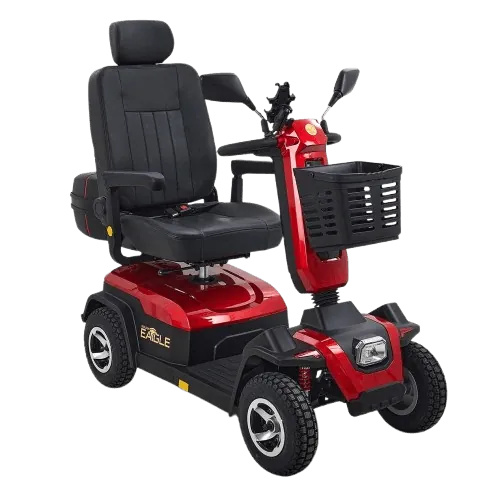
Mobility scooters are made to support independence indoors and outdoors. The right one depends on where you will ride it, how you will transport it and how much comfort and stability you need. Compare a folding mobility scooter with a full-size model, and ask a healthcare professional about fit.
Look for cushioned seats, an ergonomic design and easy-to-use controls.
Lightweight and foldable models are easier to transport and store.
Check that the scooter suits indoor, outdoor or off-road use and has enough range for your daily travel.
Mobility scooters come in many types to suit different needs. These two questions cover the main groups.
See the folding mobility scooter page for compact travel models.
Choosing the right scooter starts with the differences between 3-wheel and 4-wheel designs.
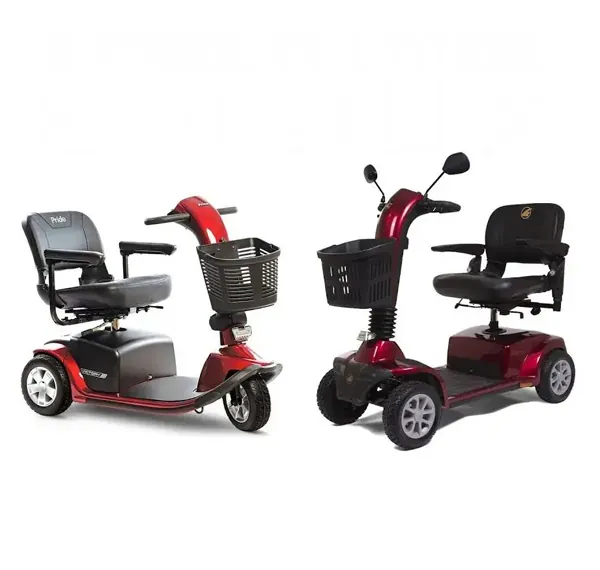
Think about where you will mostly ride, and weigh your need for maneuverability against your need for stability.
When comparing compact and full-size mobility scooters, consider the following.
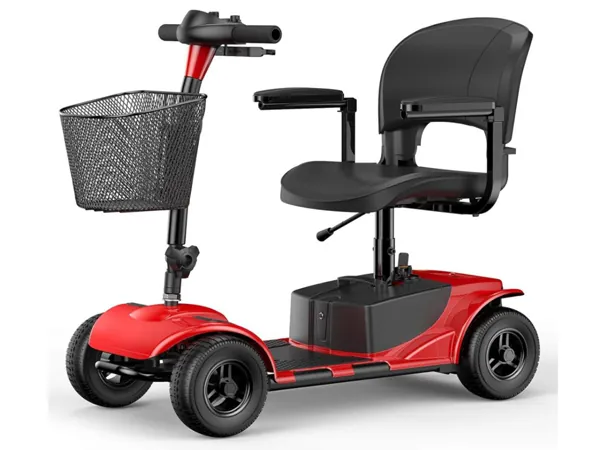
Weigh your daily needs and lifestyle to decide whether a compact or full-size scooter fits. For indoor-only use, a small wheelchair or a transport chair may also be worth comparing.
A mobility scooter and a power wheelchair both give powered mobility, but they differ in how you sit, steer and get around.
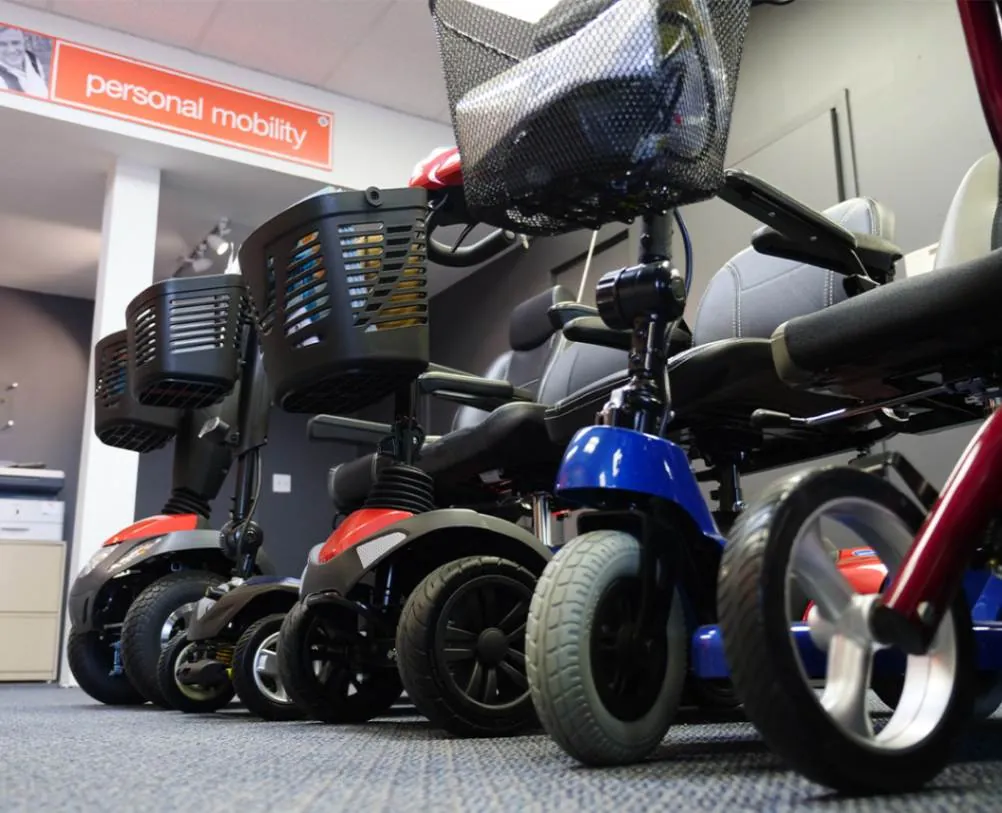
Start with where you will use it most, how long you can sit upright and steer comfortably, and how you will transport it. Ask a healthcare professional which type suits your needs. For powered chairs, read the electric wheelchair page and the motorized wheelchair page.
When selecting a mobility scooter, look for these essential features.
Suspension plays a large part in ride quality.
Batteries are critical to mobility scooter performance.
Choosing the right scooter depends on your needs and the terrain.
Follow the manufacturer's instructions and ask a healthcare professional about fit.
Financing can make a scooter more affordable. Options to look into:
Looking into these options can make owning a mobility scooter more manageable.
Understanding pricing is essential when choosing a scooter.
Compare different models and makers to find a reliable scooter that fits your needs and budget.
Several programs may help offset the cost.
Researching these programs can significantly reduce the financial burden.
When comparing makers, look at their reputation for durability and comfort, the range of models and the support after purchase.
Common types include folding, lightweight, compact, 3-wheel, 4-wheel, heavy duty and all-terrain models. Each type fits different needs, such as easier transport or longer outdoor trips.
Yes, used scooters are sold by many suppliers and can be a budget-friendly option. Ask who has checked the scooter, what condition the battery is in and what support comes with it.
Some providers offer short-term rentals, which can help for a trip or a short recovery. Ask each provider which models and terms are available.
Yes. Options include electric wheelchairs, motorized wheelchairs, portable wheelchairs and transport chairs.
Common accessories include baskets, carriers, spare batteries and chargers, and comfort items. See wheelchair accessories for related items. Some scooters can also be customized to fit specific needs.
Compare basic models and used options, decide which features are essential and compare makers. See the affordability and financing section above.
Yes, scooter insurance is available from some insurers. Coverage often includes theft, damage and liability, but policies vary, so read the terms.
Check the tires, battery and charger regularly, keep the scooter clean and schedule professional check-ups. Contact the manufacturer or an authorized repair center for repairs.
Many scooters use a handlebar and a simple seat, while many power wheelchairs use a joystick and offer more adjustable seating. See the electric wheelchair page for more.
Modern mobility scooters include several advancements aimed at user experience and safety.
These advancements can make mid-size and high-performance scooters easier to use.
Safety is a priority in modern scooter design. Features to look for:
No design removes all risk. Follow the manufacturer's instructions and ask a healthcare professional about fit.
Smart features can improve convenience and accessibility.
These features can appeal to riders who want both function and comfort.
Finding the right scooter can make a big difference in daily life. These tips help you choose.
Focusing on these points helps you compare scooters, powerchairs and electric wheelchairs for your lifestyle.
Accessories can make a big difference. Consider adding:
Accessories can make portable and senior mobility scooters more comfortable. See wheelchair accessories for related items.
Customizing a scooter can add benefits.
Consider these options to create a scooter that fits you.
Regular maintenance helps a scooter last and stay reliable. Follow these tips.
Good maintenance can also help keep costs down over time. Follow the manufacturer's instructions.
Even good scooters can have issues. Common problems and responses:
Understanding these issues helps you troubleshoot, and a qualified technician can handle repairs.
When a scooter needs professional attention, consider these options.
Rules differ by place, so check local requirements.
Mobility scooters are allowed on public roads and pedestrian areas in many places, but regulations vary.
Knowing these rules helps you use a scooter safely and legally.
Staying safe on a scooter involves following guidelines.
Following these guidelines supports a safer experience for you and others.
Insurance protects against potential losses. Here is what to know.
Insurance can give peace of mind and protect your investment.
Mobility scooters are used in many countries. Points to check:
Buying internationally needs careful planning.
Common themes are summarized in general terms, without quotes, names or individual stories.
Reviews can be tricky to read if you do not know what to look for. This guide helps.
Real-life feedback gives insight into user experiences. Here is how to make the most of it.
A quick summary of the options covered on this page.