Learn how powered chairs with a motor and a battery differ.
All terrain wheelchair guide: what to check before you choose
An all terrain wheelchair is a wheelchair that its maker describes as made for outdoor or uneven surfaces, not only smooth indoor floors. It is also searched for as an off road wheelchair or, when it has a motor, an all terrain electric wheelchair, and the parts are searched for as all terrain wheels and all-terrain wheelchair tires. The name is not a standard and this guide makes no promise about where any chair can go, so it tells you what to ask the maker. It also explains how these chairs differ and how an all terrain wheelchair compares with a manual wheelchair, an electric wheelchair and a motorized wheelchair.
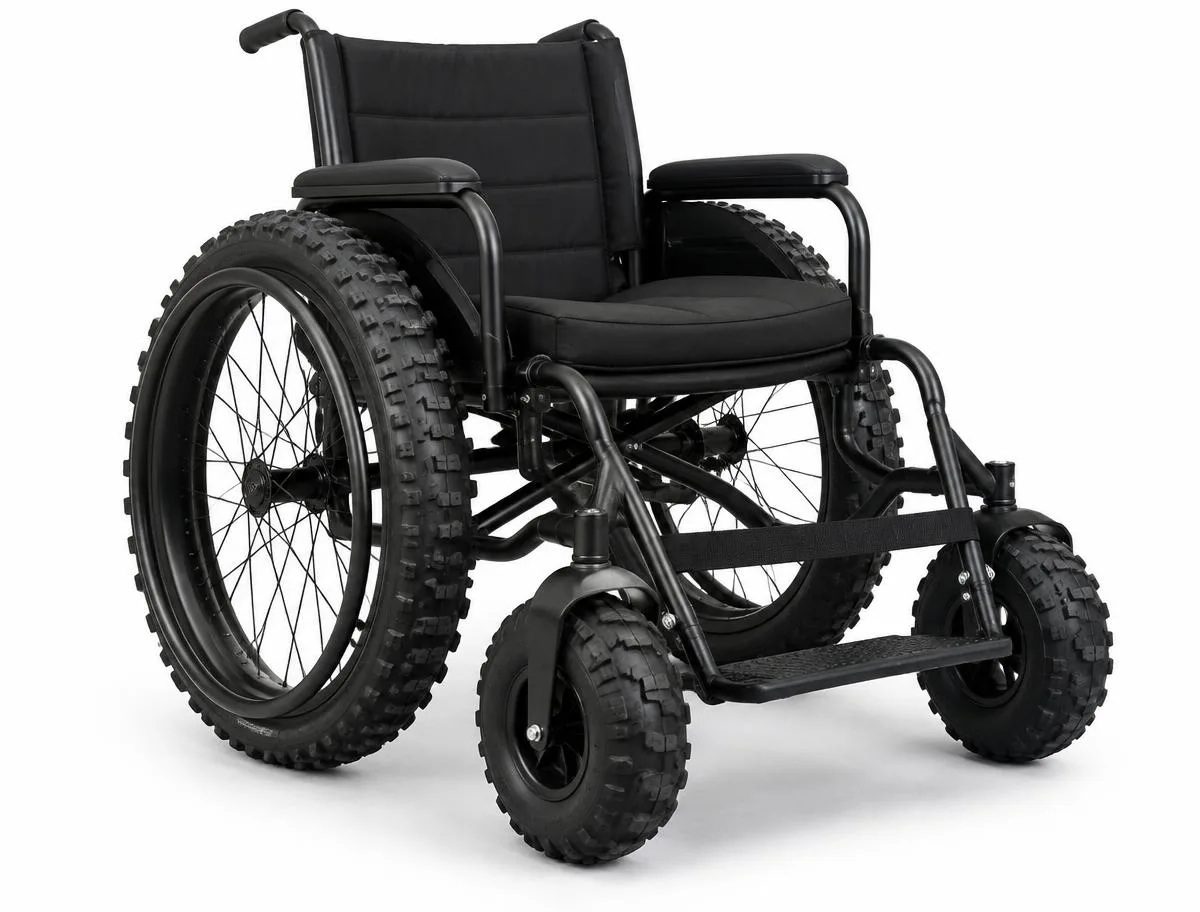
What is an all terrain wheelchair?
An all terrain wheelchair is a wheelchair that the maker describes as made for outdoor or uneven surfaces instead of smooth indoor floors. Some have different wheels or tires, some have a different frame, and some have a motor. Each maker uses the name in its own way, so compare what each maker says the chair is made for.
All terrain or off road wheelchair?
In shopping and in search, all terrain wheelchair and off road wheelchair are used for the same kind of chair, one that the maker describes as made for outdoor or uneven surfaces. The names are not a standard, so check what the maker lists for the chair you choose.
What the name does and does not tell you
The name all terrain tells you how a maker describes a chair. It does not tell you which surfaces or slopes are safe for a given user, and it does not replace the maker's instructions. Ask the maker what the chair is stated to suit, and do not assume it suits every surface.
Who an all terrain wheelchair may suit
An all terrain wheelchair may suit someone who plans to use a chair outdoors and wants to ask about options made for outdoor or uneven surfaces, and it may suit a caregiver who pushes or lifts the chair. A chair that is not right for the user or the place can be unsafe or uncomfortable. Surfaces and slopes are a safety matter, so follow the maker's instructions and ask a healthcare professional or therapist about fit and about how to move on uneven ground before you choose a chair.
All terrain wheelchair or another type of chair?
An all terrain wheelchair is defined by the outdoor or uneven surfaces the maker says it is made for, so it overlaps with several other guides on this site. These notes show where each one fits.
All terrain wheelchair or manual wheelchair
A manual wheelchair has no motor and is pushed by the user or a helper. An all terrain chair can be manual, and a chair with different wheels or a sturdier frame can be harder to push and to lift, so think about who will do the pushing.
All terrain wheelchair or electric wheelchair
An electric wheelchair has a motor and a battery. A powered chair described as all terrain has more parts and may need more room to turn and to store. The motorized wheelchair guide also covers powered chairs.
All terrain wheelchair or mobility scooter
A mobility scooter is steered with a tiller and is a different kind of aid from a wheelchair. Some scooters are also described as all terrain, so read the scooter guide if you are weighing the two. Ask a healthcare professional or therapist which suits the user.
All terrain wheelchair or heavy duty wheelchair
A heavy duty wheelchair is defined by the support the maker states, while an all terrain wheelchair is defined by the surfaces the maker describes. A chair can be one without the other, so ask the maker about both if you need both.
Types of all terrain wheelchair
Manual all terrain wheelchairs
A manual all terrain wheelchair has no motor and no battery to charge. It is pushed by the user or a helper, so think about who will do the pushing, because larger wheels or a sturdier frame can be harder to push and to lift. See the manual wheelchair guide for how manual types differ.
Folding all terrain wheelchairs
Some all terrain wheelchairs have a frame that folds, and others do not. Ask the maker what the folding steps involve and who can do them safely, and ask whether the maker's instructions for surfaces still apply to the folding model. See the folding wheelchair guide for how folding frames work.
All terrain electric wheelchairs
An all terrain electric wheelchair is a powered chair with a motor and a battery that the maker describes as made for outdoor or uneven surfaces. It has more parts than a manual chair, so ask the maker about charging, the controls, who can service the chair and how it is moved and stored. The next section looks at the wheels and tires that these chairs use.
All terrain wheels and tires: what to know
People search for all terrain wheels for a wheelchair, an off road wheelchair wheel and all-terrain wheelchair tires. These are parts that a maker describes as made for outdoor or uneven surfaces. They differ from maker to maker and the names are not a standard. These notes cover what to ask.
What the wheels and tires are
Wheels and tires sold under all terrain or off road names are described by their makers as made for outdoor or uneven surfaces. Tread, width and material differ, and so does the way a wheel fits a frame. Ask the maker what a wheel or tire is stated to suit, and compare it with how you plan to use the chair.
Fitting wheels or tires to a chair
A wheel or tire that suits one chair may not suit another. Ask the maker of your chair whether a part is made for your model, and who should fit it. Do not swap wheels or tires unless the maker says it is safe, because a change can affect how steady the chair feels and how the brakes work.
Caring for wheels and tires
Check wheels and tires often for wear, damage and anything caught in the tread, and follow the maker's steps for cleaning and for any air or repair work. If a wheel or tire looks worn or damaged, stop using the chair until it has been checked.
What to look for in an all terrain wheelchair
What the maker says the chair is made for
Ask the maker which surfaces and uses the chair is stated to suit, and ask for the instructions in writing. Do not guess, and do not use a chair in a way the maker does not state. Ask a healthcare professional or therapist about fit and about how to move on uneven ground.
Seat fit and support
A chair made for outdoor use still has to fit the user. Check that the seat supports the user without squeezing or leaving gaps, and that the back, armrests and footrests suit the user's body and posture. Ask a healthcare professional or therapist about seat fit, cushion and positioning.
Frame, wheels and parts
Look at the frame, the cross brace, the wheels, the tires, the armrests and the footrests. Ask the maker which parts are part of the chair and whether any part can be changed or added. Do not swap parts unless the maker says it is safe.
Stability and brakes
Check that the chair feels steady and that no part rocks. Ask the maker whether anti-tip parts are included or can be added, and check that the brakes are easy to reach and hold firmly.
Doorways, storage and transport
A chair with larger wheels or a longer frame may need more room. Check the doorways, hallways, the place where the chair will be stored and the vehicle where it will be carried, and compare them with the chair specifications from the maker. Try the chair in the space where you can.
Transfers and helper use
Ask who will help the user in and out of the chair and where the chair will be placed for a transfer. Lock the brakes before any transfer, and ask a healthcare professional or therapist to show safe ways to transfer.
Questions to ask before you choose
- Where will the chair be used most: at home, outdoors, in a vehicle or a mix of places?
- Which surfaces and uses does the maker state the chair is made for, and does that suit the places the user goes?
- Has a healthcare professional or therapist checked the fit of the seat, back, armrests and footrests for the user's body and posture?
- Is the chair manual or powered, and does that suit the user's routine and the helper?
- Who will push, fold, lift and move the chair: the user, a helper or both?
- Do the doorways, storage space and vehicle suit the size of the chair, as the maker lists it?
- Does the chair feel steady, and do the brakes hold firmly?
- What is included with the chair, and what support follows the sale? Ask the seller to explain this clearly.
Using and caring for an all terrain wheelchair
Safe use
Follow the maker's instructions for use, folding and storage. Choose routes and surfaces with care, and do not use the chair in a way the maker does not state. Lock the brakes before the user gets in or out, keep the footrests secure, and keep hands and fingers clear of joints and folding parts. Ask a healthcare professional or therapist about fit, positioning and how to move on slopes or uneven ground.
Regular checks
Check the frame, the cross brace, the joints, the wheels, the tires, the brakes, the bolts and the upholstery often, and keep the chair clean and dry. If a part looks worn or cracked, the chair does not lock open or a brake does not hold, stop using the chair until it has been checked.
Frequently asked questions
An all terrain wheelchair is a wheelchair that its maker describes as made for outdoor or uneven surfaces. It may be manual or powered. The name is not a standard, so ask the maker what the chair is stated to suit, and ask a healthcare professional or therapist about fit before you choose.
In shopping and in search these names are used for the same kind of chair, one that the maker describes as made for outdoor or uneven surfaces. The names are not a standard, so check what the maker lists for the chair.
An all terrain electric wheelchair is a powered chair, with a motor and a battery, that the maker describes as made for outdoor or uneven surfaces. Ask the maker about charging, the controls, service and how the chair is moved and stored, and see the electric wheelchair guide for powered chairs in general.
These are wheels and tires that a maker describes as made for outdoor or uneven surfaces. Tread, width and material differ, and the names are not a standard. Ask the maker of your chair whether a part is made for your model, and do not swap parts unless the maker says it is safe.
Some all terrain chairs have a frame that folds, and others do not. Ask the maker about the folding steps and whether the maker's instructions for surfaces still apply to the folding model, and see the folding wheelchair guide for how folding frames work.
Do not rely on the words all terrain or off road. Ask the maker which surfaces and uses the chair is stated to suit, follow the maker's instructions, and ask a healthcare professional or therapist about fit and about how to move on uneven ground.
No single chair costs the same for everyone, because cost depends on the type of chair, the parts included and whether it is manual or powered. Compare what each chair includes, not only the cost, and check the current cost with the seller.