Read the main scooter guide for types, features and care.
Folding mobility scooter guide: what to check before you choose
A folding mobility scooter is a powered scooter for people with mobility needs that its maker describes as made to fold or come apart for carrying and storage. This page is about folding mobility scooters, also searched for as a foldable scooter for adults, folding scooters for seniors and a collapsible mobility scooter, and not about commuter e-scooters. The name is not a standard and this guide makes no promise about how any scooter folds, travels or is carried, so it tells you what to ask the maker. It also explains how these scooters differ and how a folding mobility scooter compares with a standard mobility scooter, a folding wheelchair and an electric wheelchair.
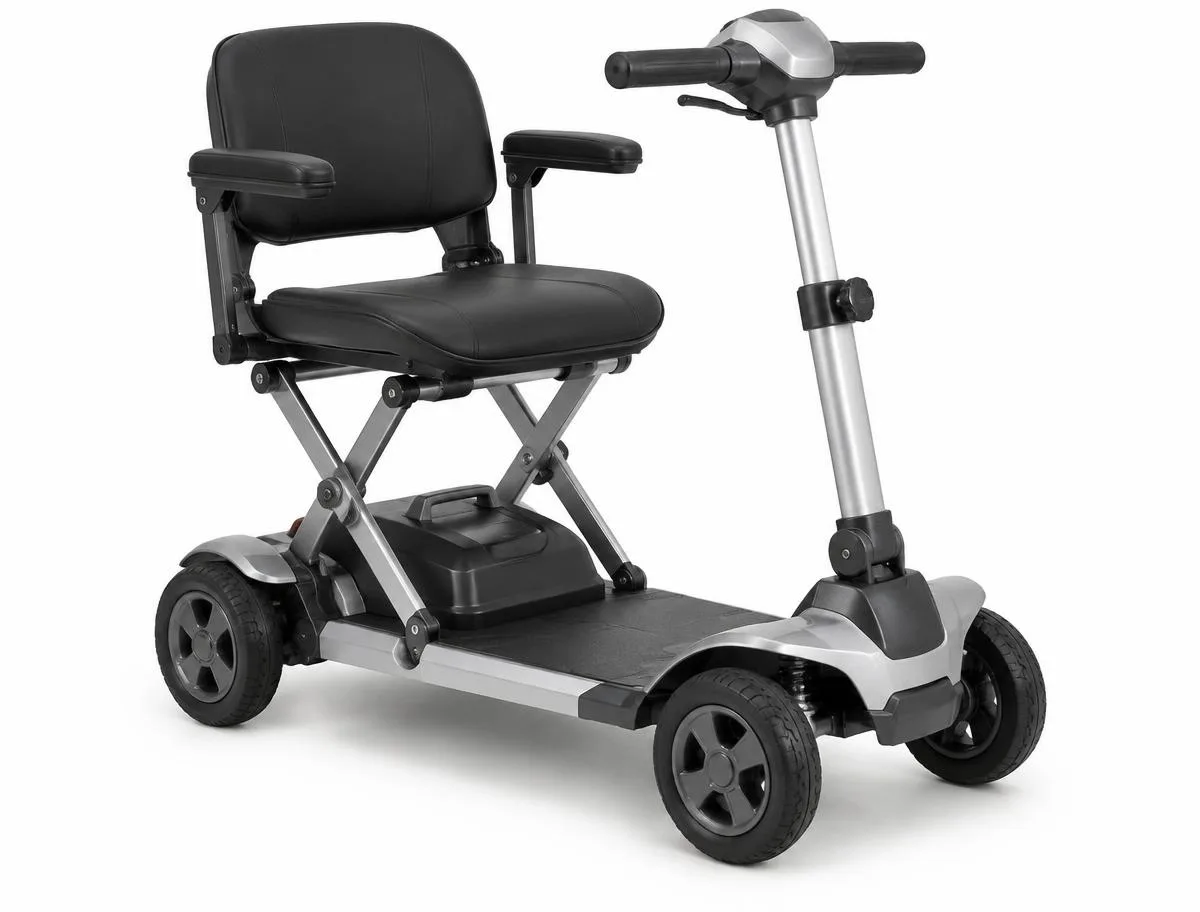
What is a folding mobility scooter?
A folding mobility scooter is a powered scooter for people with mobility needs that its maker describes as made to fold, collapse or come apart so it can be carried in a vehicle or kept in a small space. Some fold in one piece, some come apart in sections, and some have a seat or tiller that folds down. Each maker uses the name in its own way, so compare what each maker says the scooter does.
Folding, foldable or collapsible mobility scooter?
In shopping and in search, folding mobility scooter, foldable scooter and collapsible mobility scooter are used for the same kind of scooter, one that the maker describes as made to fold or collapse. The names are not a standard, so check what the maker says about how the scooter folds and what it needs.
Mobility scooter or commuter e-scooter?
A commuter e-scooter is a different kind of product, sold for everyday travel rather than as a mobility aid. Search results for folding scooters can show both. This guide is about folding mobility scooters for people with mobility needs, so if a listing does not say who the scooter is made for, ask the maker before you go further.
What the name does and does not tell you
The name folding tells you how a maker describes a scooter. It does not tell you how easy the scooter is to fold, who can lift it or whether it suits a given user, and it does not replace the maker's instructions. Ask the maker how the scooter folds and what it is stated to suit, and do not assume it suits every user or every trip.
Foldable scooters for adults and seniors
People search for a foldable scooter for adults, folding scooters for seniors, a collapsible mobility scooter for adults and the best foldable mobility scooter. These are all ways of asking for a scooter that folds. These notes cover what each wording means and what to ask.
Foldable scooter for adults
A foldable scooter for adults is a scooter that the maker describes as made for adult riders and made to fold. Ask the maker who the scooter is made for, and check that the listing is for a mobility scooter and not a commuter e-scooter. Ask a healthcare professional or therapist whether the user can sit, steer and move on and off the seat safely.
Folding scooters for seniors
Folding scooters for seniors are searched for by older adults and by family members who want a scooter that is easier to store or carry. The name does not tell you that a scooter suits an older rider. Ask a healthcare professional or therapist about fit, balance and strength, and ask who will fold and lift the scooter if the rider cannot.
Collapsible mobility scooter for adults
A collapsible mobility scooter is another name for a scooter that folds or comes apart. Ask the maker how the scooter comes apart, which parts are separate, how they go back together and who can do this safely.
Is there a best foldable mobility scooter?
No single scooter is best for every user, because the right scooter depends on the person, the places they go and how the scooter is carried. Compare what each maker states, ask a healthcare professional or therapist about fit, and use the questions further down this page instead of a ranking.
Folding mobility scooter or another type of aid?
A folding mobility scooter is defined by how it folds, so it overlaps with several other guides on this site. These notes show where each one fits.
Folding mobility scooter or standard mobility scooter
A standard mobility scooter is a scooter that the maker does not describe as made to fold. The main mobility scooters guide covers types, features and care in general, so this page does not repeat it. A scooter that folds adds hinges, latches and folding steps to check, so ask the maker what the folding design involves.
Folding mobility scooter or folding wheelchair
A folding wheelchair is a wheelchair with a frame that folds, and it is moved by the user or a helper, while a scooter is steered by the rider. Which suits the user depends on balance, strength and who will help, so ask a healthcare professional or therapist.
Folding mobility scooter or portable wheelchair
A portable wheelchair is a chair that the maker describes as made for carrying and travel. If the main need is a mobility aid that is easy to carry, compare it with a folding scooter, and ask a healthcare professional or therapist which suits the user.
Folding mobility scooter or electric wheelchair
An electric wheelchair has a motor and a battery. Many electric wheelchairs are steered with a joystick, while a scooter is steered with a tiller, and seating and support can differ. The motorized wheelchair guide also covers powered chairs. Ask a healthcare professional or therapist which suits the user.
Types of folding mobility scooter
Folding and travel scooters
Travel scooter is a name used for scooters that the maker describes as made for trips, and many of them fold. Ask the maker what the folding steps involve, who can do them safely and how the scooter is carried, and ask whether the maker's instructions still apply once the scooter is folded.
Portable scooters that come apart
Some portable mobility scooters come apart in sections instead of folding in one piece. Ask the maker which parts separate, how they go back together and who can lift each part, and compare that with the person who will do the lifting.
Lightweight folding scooters
Lightweight is a word that makers use in their own way, and it does not tell you who can lift the scooter. Ask the maker for the weight of the scooter and of its heaviest part, as the maker lists them, and compare that with the person who will lift.
Powered folding scooters and charging
A folding mobility scooter has a motor and a battery as well as parts that fold, so ask the maker about charging, the controls, who can service the scooter and how it is moved and stored. For wider coverage of scooter types, see the mobility scooters guide.
Airline approved mobility scooters: what to check
People search for airline approved mobility scooters and for a scooter that can go on a plane. Air travel rules are set by the airline and by the maker, and they can change, so this guide does not say which scooters or parts any airline accepts. Check with the airline and the maker before travel.
What airline approved means in search
Airline approved is a phrase used in shopping and in search. It is not a label that this guide can confirm for any scooter, and a listing that uses the phrase is not a substitute for asking the airline. Ask the maker what the listing means by it, and ask for the statement in writing.
What to ask the airline
Ask the airline how it handles a mobility scooter, what it needs to know about the scooter and its power source before the trip, whether it must be told in advance and who to contact on the day. Ask early, because answers can differ from airline to airline and from trip to trip.
What to ask the maker
Ask the maker whether it states anything about air travel for the scooter, how the scooter and its parts should be folded and packed, and whether any part must be removed. Keep the maker's instructions with you for the trip.
Planning the trip
Allow extra time, keep the answers from the airline and the maker in writing, and plan who will help with transfers and with moving the scooter. Ask a healthcare professional or therapist about transfers and about traveling with a mobility aid.
What to look for in a folding mobility scooter
What the maker says the scooter is made for
Ask the maker which riders, uses and places the scooter is stated to suit, and ask for the instructions in writing. Do not guess, and do not use a scooter in a way the maker does not state. Ask a healthcare professional or therapist about fit and about how to ride safely.
Folding steps and who can do them
Ask the maker to show how the scooter folds and unfolds and how many hands the steps need. Try the steps before you choose where you can, and check that the folded scooter locks closed and that no part swings loose. Ask who will fold the scooter if the rider cannot.
Lifting, carrying and storing
A scooter that folds still has to be lifted, rolled or carried by someone. Ask the maker for the weight of the scooter and of each part, as the maker lists them, and compare that with the person who will lift. Check how the scooter is carried safely and where it will be stored.
Seat fit and comfort
A scooter made to fold still has to fit the rider. Check that the seat supports the rider without squeezing or leaving gaps, that the rider can reach the controls and rest the feet comfortably, and that the armrests, if there are any, suit the rider's body and posture. Ask a healthcare professional or therapist about seat fit and positioning.
Stability and brakes
Check that the scooter feels steady, that no part rocks and that the brakes are easy to use and hold firmly. Ask the maker whether anti-tip parts are included or can be added, and follow the maker's instructions for use.
Vehicle, doorways and storage space
Check the vehicle where the scooter will be carried, the doorways and hallways it will pass through and the place where it will be stored, and compare them with the sizes the maker lists for the folded and unfolded scooter. Try the scooter in the space where you can.
Transfers and helper use
Ask who will help the rider on and off the seat and where the scooter will be placed for a transfer. Follow the maker's steps for switching off and braking the scooter before any transfer, and ask a healthcare professional or therapist to show safe ways to transfer.
Questions to ask before you choose
- Where will the scooter be used most: at home, outdoors, on trips or a mix of places?
- Is the scooter made for people with mobility needs, and does the maker say so, or is it a commuter e-scooter?
- Has a healthcare professional or therapist checked the fit of the seat and controls for the rider's body and posture?
- How does the scooter fold, and does the maker explain the steps in writing?
- Who will fold, lift and carry the scooter: the rider, a helper or both?
- Do the vehicle, doorways and storage space suit the folded and unfolded scooter, as the maker lists them?
- If air travel is planned, what do the airline and the maker each say, and are both answers in writing?
- What is included with the scooter, and what support follows the sale? Ask the seller to explain this clearly.
Using and caring for a folding mobility scooter
Safe use
Follow the maker's instructions for use, folding and storage. Choose routes with care, and do not use the scooter in a way the maker does not state. Switch the scooter off before the rider gets on or off, keep hands and feet clear of hinges and folding parts, and make sure the scooter is fully unfolded and locked before it is used. Ask a healthcare professional or therapist about fit, positioning and safe riding.
Folding parts and latches
Check the hinges, latches, locking pins and joints often, and check that the scooter locks open and locks closed as the maker describes. If a latch is loose, a part looks worn or cracked, or the scooter does not lock, stop using it until it has been checked.
Regular checks
Check the frame, the wheels, the tires, the brakes, the controls, the charger and its cable, the bolts and the seat often, keep the scooter clean and dry, and follow the maker's steps for charging and storage. If a part looks worn or damaged or a brake does not hold, stop using the scooter until it has been checked.
Frequently asked questions
A folding mobility scooter is a powered scooter for people with mobility needs that its maker describes as made to fold or come apart for carrying and storage. The name is not a standard, so ask the maker how the scooter folds and what it is stated to suit, and ask a healthcare professional or therapist about fit before you choose.
In shopping and in search these names are used for the same kind of scooter, one that the maker describes as made to fold or collapse. The names are not a standard, so check what the maker says about how the scooter folds.
No. A commuter e-scooter is sold for everyday travel, while a folding mobility scooter is a mobility aid for people with mobility needs. Search results can show both, so check who the maker says the scooter is made for, and see the mobility scooters guide for mobility scooters in general.
Some folding scooters are described by their makers as made for older adults, but the name does not tell you that a scooter suits a given rider. Ask the maker who the scooter is made for, and ask a healthcare professional or therapist about fit, balance and strength before you choose.
Airline and air travel rules are set by the airline and can change, so this guide does not say which scooters any airline accepts. Check with the airline and the maker before travel, and ask for both answers in writing.
No single scooter is best for everyone. Ask the maker how the scooter folds and what it is stated to suit, check who will fold and lift it, try the seat and controls where you can, and ask a healthcare professional or therapist about fit. If a chair is also under consideration, see the folding wheelchair guide.
No single scooter costs the same for everyone, because cost depends on the type of scooter, the parts included and how it folds. Compare what each scooter includes, not only the cost, and check the current cost with the seller.