Compare chairs made to be pushed by a helper.
Reclining wheelchair guide: how to choose the right chair
A reclining wheelchair is a wheelchair with a backrest that can lean back, so the user can sit upright or rest in a more reclined position. This guide explains how reclining chairs work, how manual and electric recliner chairs differ, what to check before you choose, and how a reclining wheelchair compares with a transport chair and a manual wheelchair.
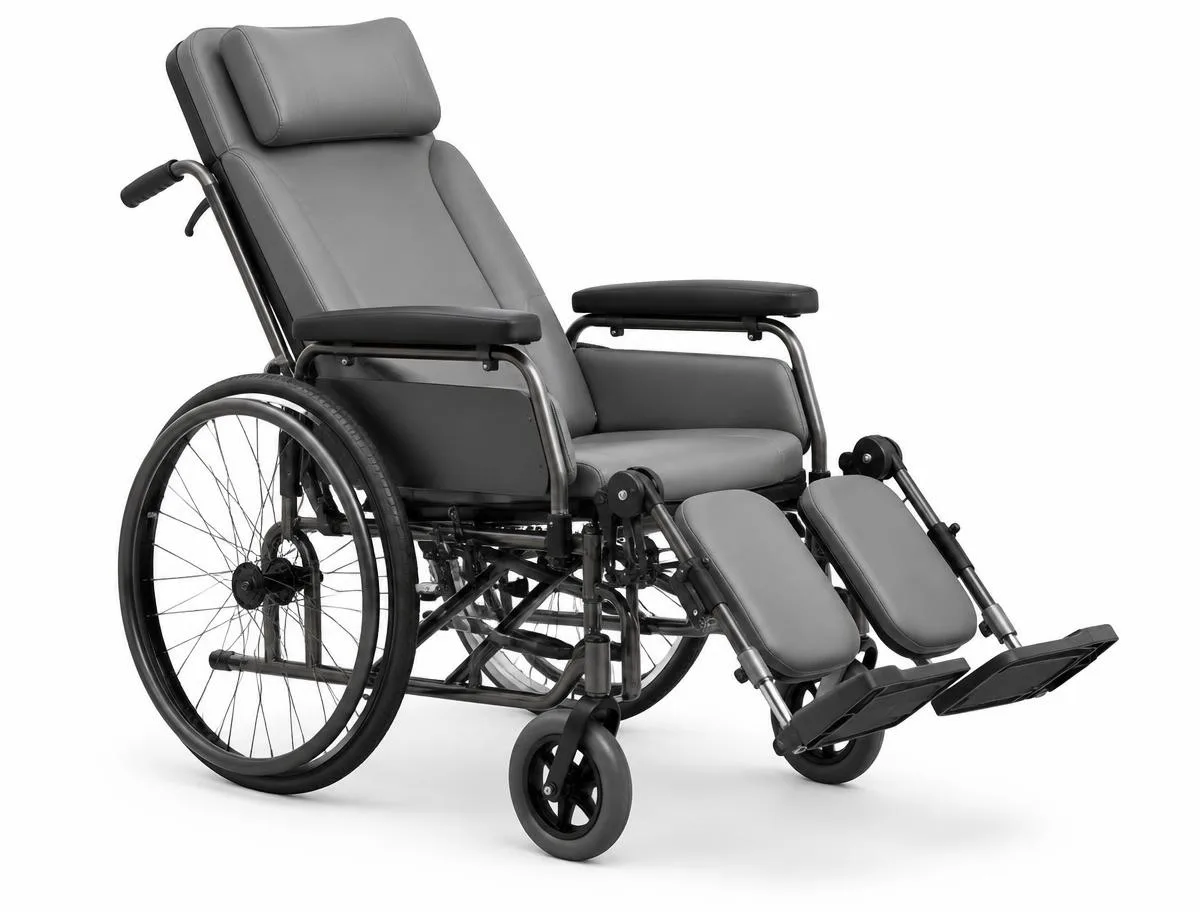
What is a reclining wheelchair?
A reclining wheelchair has a backrest that can lean back, so the user can sit upright or rest in a more reclined position. Some people use one for rest breaks during the day, and others use one for most of the day. A reclining wheelchair may be manual, which means a helper usually pushes it, or powered, which means a motor helps it move.
How a reclining backrest works
On many reclining wheelchairs the backrest moves back and forward, and a lever, strap or control holds it at the chosen angle. Some chairs also have leg rests that lift, and some have a headrest that supports the head when the back leans. Each maker uses its own method, so read the instructions for the chair you choose.
Who a reclining wheelchair may suit
A reclining wheelchair may suit someone who wants to change position during the day, or a caregiver who helps with rest breaks and transfers. Recline and tilt change how the user is positioned, so ask a healthcare professional or therapist about fit and positioning before you choose a chair.
Reclining wheelchair or another type of chair?
A reclining wheelchair is defined by its backrest, so it overlaps with several other guides on this site. These notes show where each one fits.
Reclining wheelchair or transport chair
A transport chair is made to be pushed by someone else, and a reclining chair is often pushed by a helper too. A transport chair is usually built for short outings, while a reclining chair is built around a backrest that can lean back. Compare both guides if a helper will do most of the pushing.
Reclining wheelchair or manual wheelchair
A standard manual wheelchair has a fixed or slightly adjustable back, and many users push it themselves. A reclining chair gives that up for a backrest that leans back, and it often needs a helper. The manual wheelchair guide explains the manual types in more detail.
Reclining wheelchair or folding wheelchair
A folding wheelchair is defined by a frame that folds. Some reclining chairs fold and others do not, so check the folding steps for the chair you choose. The folding wheelchair guide looks at how folding frames work and what to check for storage and travel.
Types of reclining wheelchair
Manual reclining wheelchairs
A manual reclining wheelchair is pushed by a helper. It has no motor and no battery to charge. Many have push handles and smaller rear wheels, and the backrest is moved by hand.
Folding reclining wheelchair
A folding reclining wheelchair has a frame that folds as well as a backrest that leans back. This can help with storage and loading into a car, but a reclining back and leg rests can add parts to fold, so ask the maker what the folding steps involve. See the folding wheelchair guide for how folding frames work.
Reclining and tilt: what is the difference?
Recline changes the angle of the backrest. Tilt changes the angle of the whole seat and back together. Some chairs offer recline, some offer tilt and some offer both, so ask the maker which the chair has and what each adjustment does. Ask a healthcare professional or therapist which suits the user.
Electric recliner wheelchair: what to know
An electric recliner wheelchair is a powered chair with a backrest that can recline, often moved by a motor instead of by hand. People search for it by this name, and it overlaps with the powered chair guides on this site. These notes cover what is different when recline is powered.
Powered recline and tilt
On a powered chair, a control can change the recline angle, the tilt angle or the leg rests without a helper lifting or pushing anything. Some chairs let the user work the controls, and others are set up so that a helper works them. Ask the maker which controls the chair has and who can operate them safely.
Battery, charging and care
A powered chair has a battery that needs charging. Follow the maker's instructions for charging and care, and ask the maker what happens to the recline and tilt controls when the battery runs low.
Electric recliner wheelchair or standard powered chair
The electric wheelchair and motorized wheelchair guides cover powered chairs in general. This page looks at the recline: what it adds and what to check. A powered chair with recline may be heavy and hard to move, so ask the maker about transport and storage.
What to look for in a reclining wheelchair
Backrest and recline adjustment
Ask to see the recline in use. The backrest should move smoothly, hold at each angle without slipping and return upright without a sudden drop. Check that the helper can reach the lever or control easily.
Headrest and head support
When the back leans, many users need support for the head. Check whether a headrest comes with the chair or can be added, whether it adjusts, and ask a healthcare professional or therapist what support suits the user.
Leg rests and footrests
Many reclining chairs have leg rests that lift or swing away. Check that they adjust, lock firmly and can be moved aside for transfers, and ask a healthcare professional or therapist about leg positioning.
Comfortable reclining wheelchair: seat, back and cushion
A comfortable reclining wheelchair has a seat and back that support the user without squeezing or leaving gaps, both upright and reclined. Comfort differs from person to person, so ask a healthcare professional or therapist which cushion and back support suit the user, and ask about pressure care.
Stability and brakes
Leaning the back can change how the chair balances, so check that the chair feels steady both upright and reclined and that no part rocks. Ask the maker whether anti-tip parts are included or can be added, and check that the brakes are easy to reach and hold firmly.
Transfers and helper use
Ask who will recline the chair, lift the leg rests and help the user in and out. Lock the brakes before any transfer, and ask a healthcare professional or therapist to show safe ways to transfer and to change position.
Questions to ask before you choose
- Who will push, recline and help the user in and out of the chair: the user, a helper or both?
- Is the chair manual or powered, and does that suit the user's routine and the helper?
- Does the chair have recline, tilt or both, and has a healthcare professional or therapist said which suits the user?
- Does the backrest hold firmly at each angle and return upright smoothly?
- Do the headrest, leg rests, seat and back suit the user's body and posture?
- Does the chair feel steady both upright and reclined, and does it fold if folding is needed?
- What does the maker list for weight, size and capacity?
- What is included with the chair, and what support follows the sale? Ask the seller to explain this clearly.
Using and caring for a reclining wheelchair
Safe use
Follow the maker's instructions for recline, tilt, folding and use. Lock the brakes before the user gets in or out and before the backrest or leg rests are moved, keep the footrests secure, and move the backrest slowly. Keep hands and fingers clear of moving joints and levers. Ask a healthcare professional or therapist about fit, positioning and how to move on slopes or uneven ground.
Regular checks
Check the recline lever or control, locks, joints, wheels, tires, brakes, headrest and upholstery often, and keep the chair clean and dry. If a part looks worn, the backrest does not hold its angle or a control does not respond, stop using the chair until it has been checked.
Frequently asked questions
A reclining wheelchair is a wheelchair with a backrest that can lean back, so the user can sit upright or rest in a more reclined position. It may be manual or powered. Ask a healthcare professional or therapist which style suits the user.
An electric recliner wheelchair is a powered chair with a backrest that can recline, often moved by a motor. Ask the maker which controls the chair has and who can use them, and see the electric wheelchair guide for powered chairs in general.
Comfort differs from person to person. Look for a seat, back, headrest and leg rests that support the user without squeezing or leaving gaps, both upright and reclined, and ask a healthcare professional or therapist which cushion and supports suit the user.
Some reclining chairs have a frame that folds. A reclining back and leg rests can add parts to fold, so ask the maker about the folding steps and the folded size. See the folding wheelchair guide for how folding frames work.
Recline changes the angle of the backrest, while tilt changes the angle of the whole seat and back together. Some chairs have one and some have both. Ask the maker what each adjustment does, and ask a healthcare professional or therapist which suits the user.
They are not the same. A transport chair is made to be pushed by someone else, while a reclining wheelchair is described by a backrest that leans back. Some reclining chairs are pushed by a helper, and some are powered.
No single chair costs the same for everyone, because cost depends on the type of chair, the adjustments, the parts included and whether it is manual or powered. Compare what each chair includes, not only the cost, and check the current cost with the seller.